Tokyo Anti-Library
Archasm competition entry | Team of 2 | Honorable mention @19th Rank | Architecture | App design
The competition was to design a landmark 21st-century public library in Tokyo that explores the library's purpose in our digital world. The proposal was to address concerns about the declining relevance of libraries by transforming them into advanced hubs for research and knowledge sharing. Ultimately, the goal is to create a new architectural standard that serves as a blueprint for future libraries worldwide.
Initial enquiry and investigation
In order to answer these questions we wanted to first get a broader understanding of the impact of digitization on physical spaces by making an evolution diagram of libraries.
18th Century
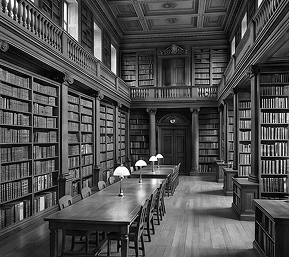
20th Century
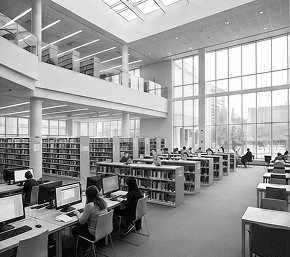
21st Century
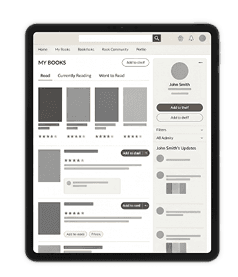
“Architecture is no longer simply the play of masses in light. It now embraces the play of digital information in space.” - William J Mitchell
Hypothesis
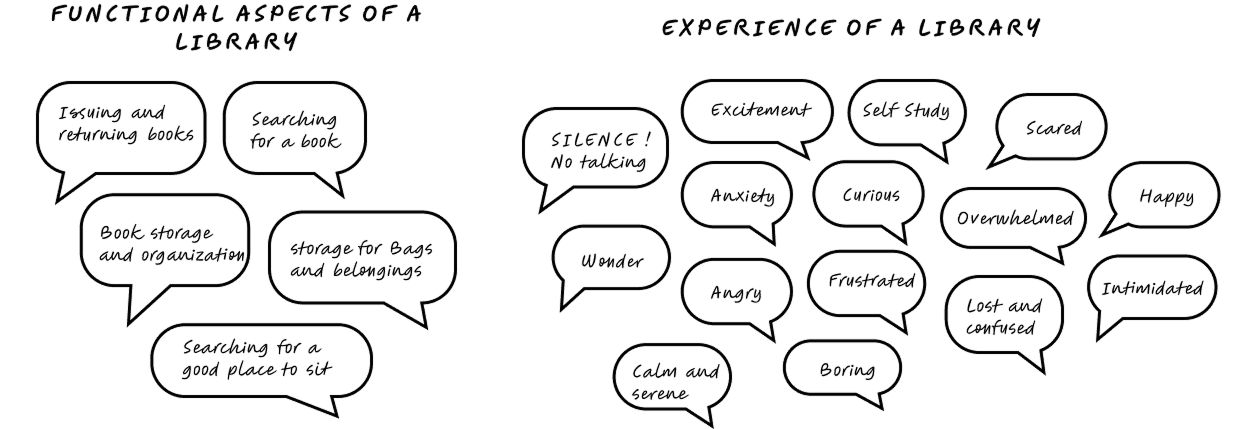
Based on our understanding, our initial idea is that any physical space can be subdivided in terms of its functional aspects and experiential aspects. And in the digital era if the functional aspects get transferred into the virtual realm, we can focus on enhancing the experiential aspects of any physical space.
Overall design objective
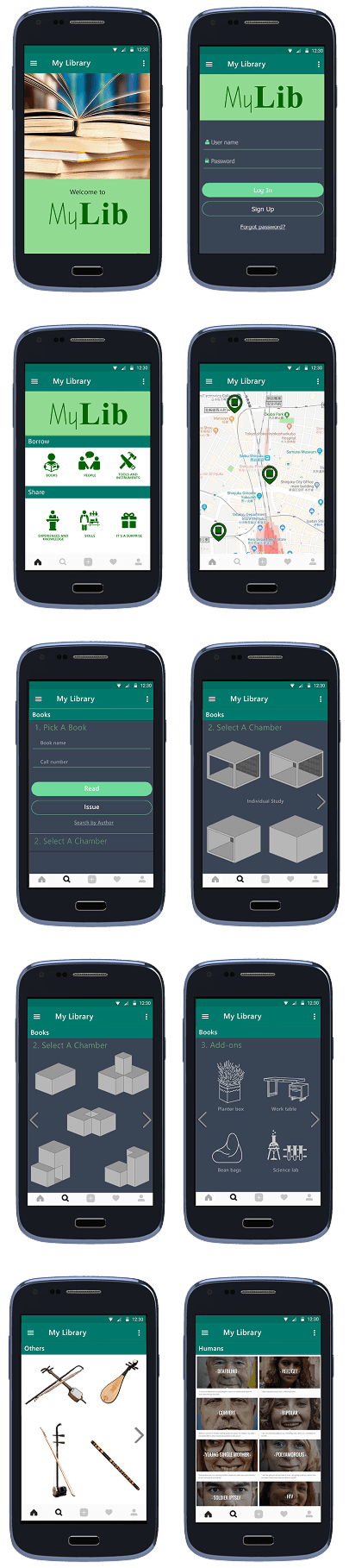
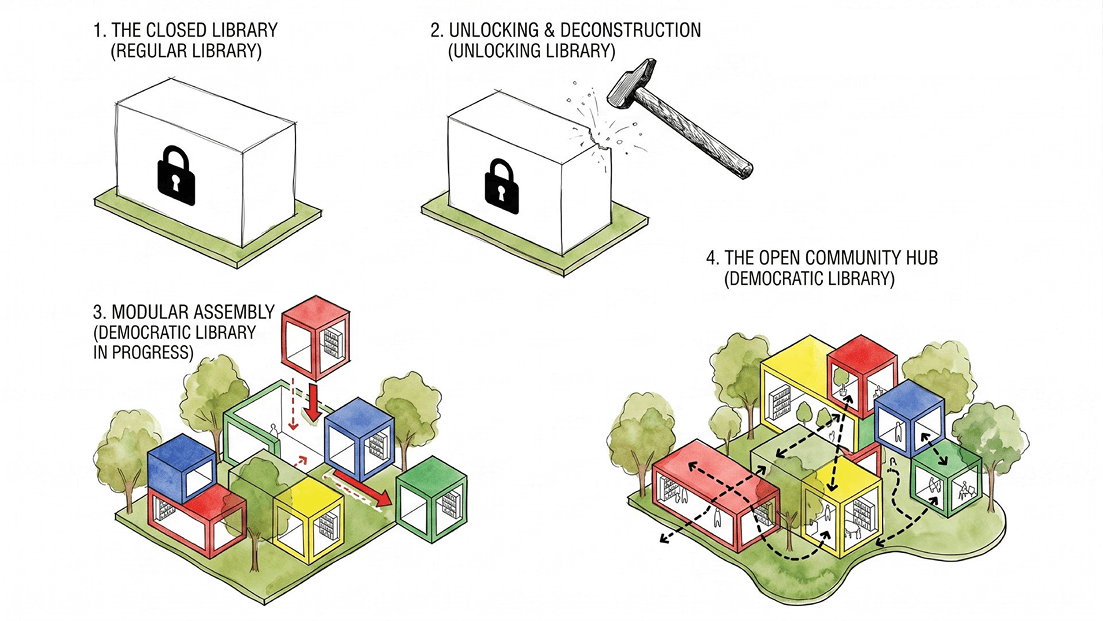
To create a library that is “For the people, by the people and of the people,” by shifting all functional aspects of a library to the virtual realm to enhance the physical experience of the library.
Final proposal
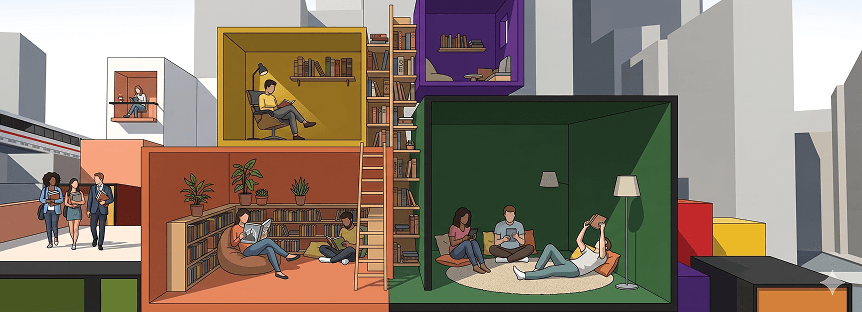
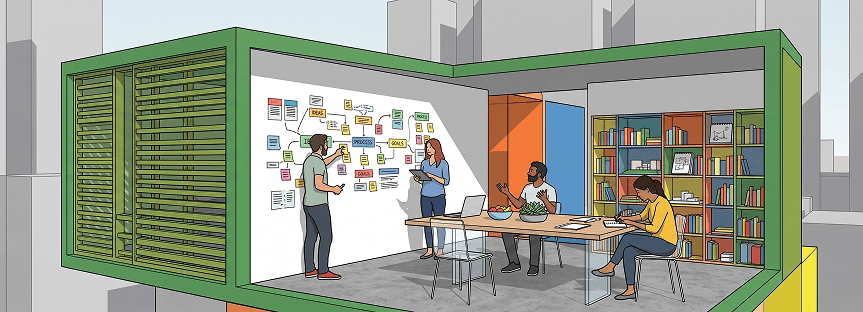
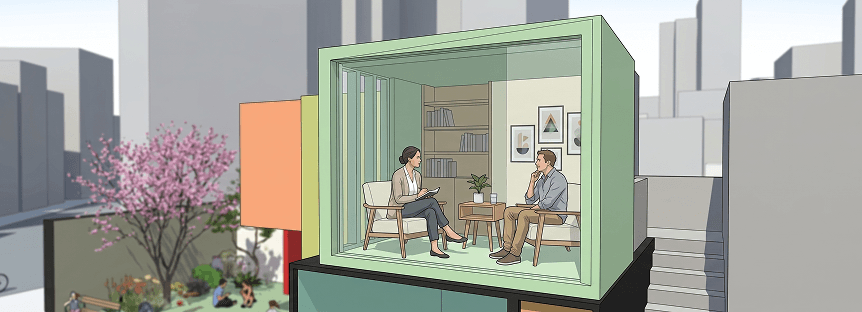
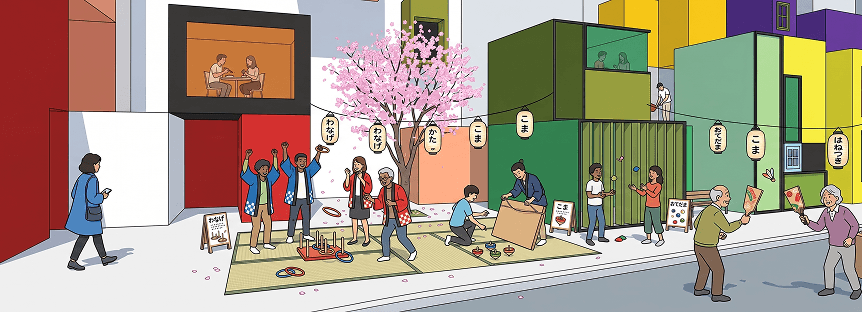
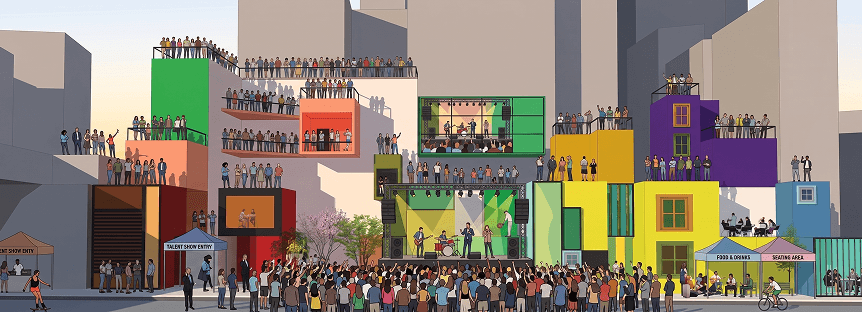
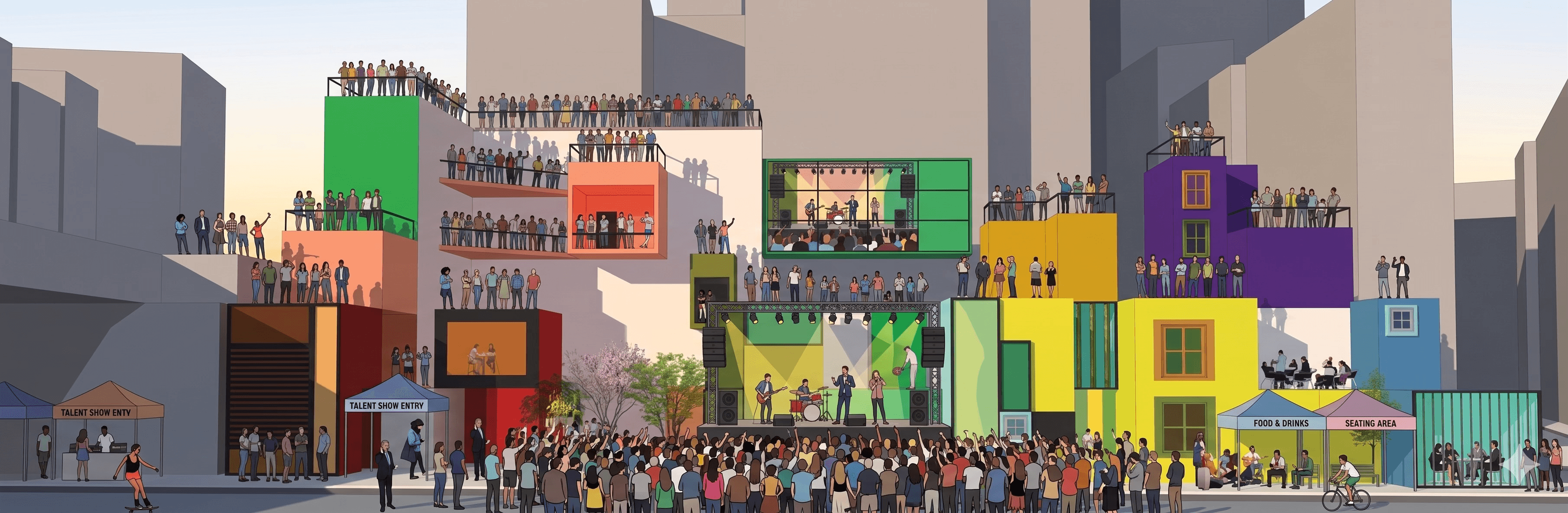
Our initiative presents a bifurcated framework that harmonizes the digital and physical realms to redefine the library experience. By leveraging the concept of the “Phygital,” we aim to create a seamless transition between virtual navigation and physical habitation. In the virtual realm, users engage with a high-fidelity digital interface, while the physical library becomes a place for discovery, community, and shared experience.